

Service
06
About the service
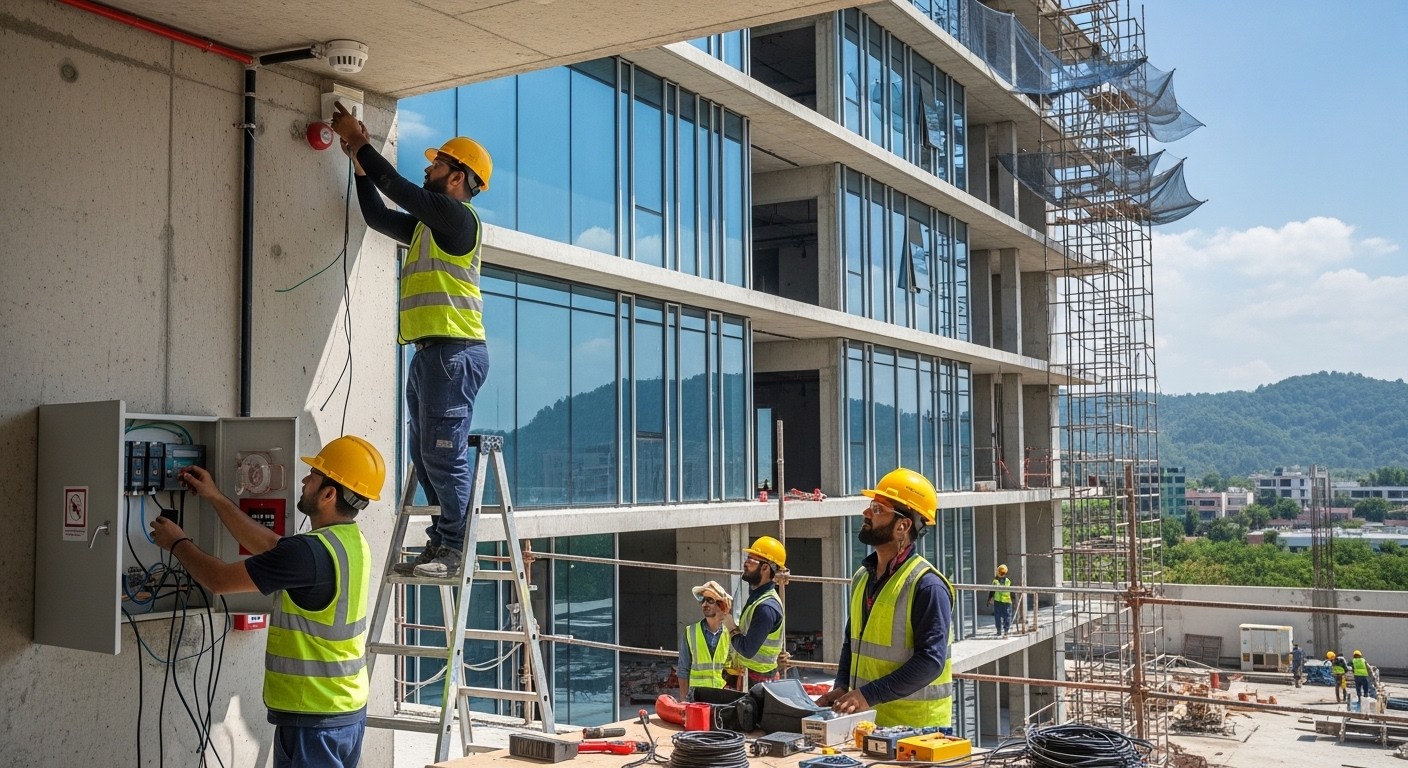
A fire alarm system is the first line of defense in any emergency. The critical network that detects smoke, heat, or fire and alerts occupants before lives are at risk. At Custom Engineering, we design, install, and commission complete fire alarm solutions that integrate seamlessly with your building's infrastructure. Our systems provide reliable early warning, precise incident location, and clear emergency communication when every second counts.From intelligent addressable panels that pinpoint exact device locations to comprehensive notification appliance networks that ensure every occupant receives the alarm, our installations are engineered for absolute reliability. We coordinate every aspect with your electrical and mechanical systems to ensure that upon alarm activation, proper responses occur—including HVAC shutdown, elevator recall, and door release sequences—creating a fully integrated safety ecosystem.
When seconds matter most, a properly designed and maintained fire alarm system makes the difference between controlled evacuation and catastrophe. With Custom Engineering as your partner, you gain more than equipment—you gain the confidence that comes from knowing your building and its occupants are protected by a system engineered for peak performance, today and for years to come.
Download Brochure
What’s include in the services?
1. Addressable Fire Alarm System Installation
We specialize in the installation of intelligent addressable fire alarm control panels (FACP) that pinpoint the exact location of an activated device, enabling rapid response and minimal disruption.
Our Installation Includes:
Control Panels: Mounting and programming of addressable main control panels with expandable capacity for future building growth.
Loop Wiring: Installation of Signaling Line Circuits (SLC) using twisted shielded cable, properly terminated and tested for communication integrity.
Device Addressing: Precise programming of unique addresses for every detector and module, mapped to building floor plans for immediate identification during alarms.
Annunciators: Installation of remote LCD annunciators at building entrances for firefighter access and status overview.
Benefits: Addressable systems provide exact device location, faster troubleshooting, reduced false alarms, and greater flexibility for system modifications.
2. Smoke & Heat Detection Device Installation
We install a comprehensive range of detection devices tailored to your building's occupancy, hazards, and environmental conditions.
Detection Devices We Install:
Device Type | Application |
|---|---|
Ionization Smoke Detectors | Fast-flaming fire detection |
Photoelectric Smoke Detectors | Smoldering fire detection (recommended for most applications) |
Combination Smoke/CO Detectors | Dual protection for residential and light commercial |
Fixed Temperature Heat Detectors | Kitchens, boiler rooms, garages (where smoke detectors may false alarm) |
Rate-of-Rise Heat Detectors | Areas with rapid temperature increase potential |
Beam Detectors | Atriums, warehouses, high-ceiling spaces |
Duct Smoke Detectors | HVAC shutdown to prevent smoke circulation |
Our Process: Each device is securely mounted, properly spaced according to NFPA 72 guidelines, and thoroughly tested for sensitivity and communication with the control panel.
3. Notification Appliance Installation (Mass Notification)
Detecting a fire is only half the equation. Occupants must be alerted clearly and quickly. We install comprehensive notification appliance networks that ensure every person in the building receives the alarm.
Notification Devices We Install:
Horn/Strobe Combinations: Wall and ceiling-mounted units providing both audible and visual alerts, synchronized for consistency.
Weatherproof Notification Appliances: Outdoor-rated devices for building exteriors, parking structures, and covered walkways.
Speakers & Voice Evacuation Systems: Clear, intelligible voice instructions for phased evacuation or relocation strategies in high-rise and large occupancy buildings.
Textual Notification Displays: LED message boards for additional emergency instruction in assembly occupancies.
Bed Shakers & High-Intensity Strobes: Specialized devices for sleeping areas and hearing-impaired occupants.
Compliance: All notification appliances are installed to meet ADA requirements for audibility and visual coverage, with proper candela ratings and decibel levels verified by testing.
4. Manual Pull Station & Auxiliary Device Installation
Manual activation remains a critical component of any fire alarm system. We install and connect manual pull stations and auxiliary devices that allow occupants and systems to trigger alarms when needed.
Our Installation Includes:
Manual Pull Stations: Single-action and double-action stations mounted at required egress points, properly height-positioned for accessibility.
Monitor Modules: Installation of modules to monitor sprinkler system flow switches, tamper switches, and valve positions.
Control Modules: Devices to interface with ancillary equipment such as magnetic door holders, elevator recall controls, and HVAC shutdown relays.
Remote Test Stations: Installation of remote test switches for duct detectors and other inaccessible devices.
Integration: All auxiliary devices are properly programmed and mapped within the control system to initiate appropriate responses (e.g., elevator recall, fan shutdown, door release) upon alarm activation.
5. System Testing, Commissioning & Final Acceptance
Installation is not complete until every device functions precisely as designed. We conduct rigorous testing and commissioning to verify system performance and secure final approval from authorities having jurisdiction (AHJ).
Our Commissioning Process:
Continuity Testing: Verification of all wiring for opens, shorts, and ground faults prior to device connection.
Device Function Testing: 100% testing of every detector, pull station, and notification appliance to confirm proper operation and communication.
Sensitivity Testing: Verification that smoke detectors are within their listed sensitivity ranges.
Battery & Power Supply Testing: Load testing of backup batteries and verification of proper charging and transfer operation.
System Response Verification: Testing of all programmed responses including fan shutdown, damper closure, elevator recall, and door release.
Central Station Communication: Verification that signals transmit correctly to the monitoring center.
Documentation: Provision of complete as-built drawings, device location schedules, and test reports for owner records and AHJ approval.
Why Choose Custom Engineering for Fire Alarm Installation?
Code Compliance Expertise: All installations strictly adhere to NFPA 72, NFPA 70 (NEC), IBC, and local jurisdiction requirements.
Integrated MEP Perspective: We coordinate fire alarm systems with electrical power, mechanical controls, and plumbing interfaces for seamless operation.
Certified Technicians: Our installers are NICET-certified and factory-trained on leading fire alarm manufacturers.
Comprehensive Testing: We don't just install and leave—we verify every device, every circuit, and every response before final acceptance.
Lifetime Support: From routine inspections to system upgrades and emergency repairs, we remain your partner in life safety.
Protect What Matters Most
A fire alarm system is more than code compliance—it's peace of mind. Partner with Custom Engineering for fire alarm installation that delivers reliable detection, clear notification, and total protection for your building and its occupants.
Contact us today to discuss your fire alarm system requirements.




Let’s Work Together
We're here to help you bring your construction project to life! Whether you have questions, want to discuss your ideas.